
You have noticed a rising water bill, a drop in pressure, or damp patches appearing where they should not be. You know you have a leak somewhere, but the question is: is it underground on the supply pipe coming into your property, or is it inside the building on your internal plumbing?
The answer matters because it determines who is responsible for the repair, what kind of specialist you need, and how urgently the problem needs to be addressed. Here is how to work out which type of leak you are dealing with.
Understanding the Boundary
Your water supply has a clear ownership split. The water company is responsible for the mains pipe in the road and, in most cases, the pipe and fittings up to and including the external stop tap or boundary stop valve at the edge of your property. Everything beyond that point, from the boundary to your kitchen tap, is your responsibility.
This means the underground supply pipe running beneath your drive, garden or path is yours to maintain. It also means that if it develops a leak, the repair is down to you, not the water company. If you think the leak sits between the mains and your home, our guide on what to do if you suspect a mains leak covers your next steps.
Internal plumbing covers everything inside the building: the pipework feeding radiators, taps, toilets, showers, dishwashers and boilers. Leaks in this category are generally handled by a plumber.
The Stop Tap Test
The simplest way to narrow down the location is the stop tap test.
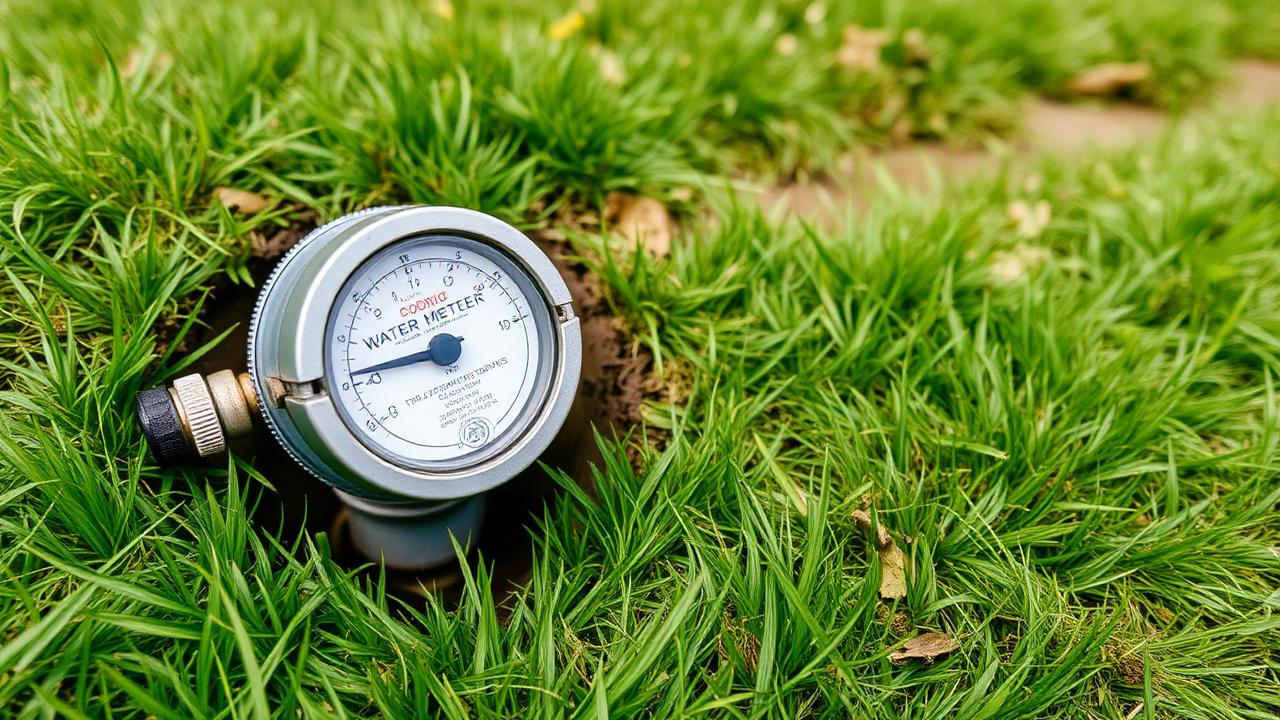
First, locate your internal stop tap (usually under the kitchen sink) and turn it off fully. Then check your water meter. If the meter is still recording flow with the internal stop tap closed, the leak is on the underground supply pipe between the meter and your stop tap. Water is escaping before it even reaches the building.
If the meter stops when the internal stop tap is closed, the leak is most likely inside the property on your internal plumbing.
This is a quick and reliable first step, but there are exceptions. If your internal stop tap does not shut off completely (which is common in older properties where the valve has seized or degraded), the test will not give a clean result. In that case, a specialist assessment is the best next step. Our detailed walkthrough on how to use your water meter to check for a leak explains the readings to look for.
Signs That Point to an Underground Leak
Underground supply pipe leaks tend to produce a specific set of symptoms.
You may notice areas of your garden, driveway or path that are persistently damp even during dry weather. Grass may grow noticeably faster or greener in a strip or patch above the pipe route. Sections of paving, tarmac or gravel may sink or shift as the escaping water erodes the sub-base material beneath them.
Inside the property, the most common sign is a gradual loss of water pressure across all outlets. Because the leak is on the main incoming supply, it affects everything downstream. You might also hear a faint hissing or rushing sound near the internal stop tap when the property is quiet and all taps are off. Our article on the 5 warning signs of an underground leak covers these symptoms in more detail.
Underground leaks tend to get worse over time. The escaping water softens the surrounding ground, which puts more stress on the pipe, which leads to a larger failure. What starts as a pinhole or hairline crack can develop into a significant burst if left unaddressed.
Signs That Point to an Internal Leak
Internal leaks behave differently. They are usually localised. You might see damp on a specific wall, ceiling or floor rather than a general issue across the property. Water staining, bubbling paint, lifting laminate or a musty smell in one room all point to an internal source.
Pressure loss from an internal leak is often less dramatic because the supply pipe is intact and delivering full flow into the building. The water is simply escaping at a single point within the internal system.
Boiler pressure dropping repeatedly is another common sign. If your combi or system boiler needs topping up regularly and there is no obvious drip from any radiator valve or connection, there may be a leak on the central heating pipework running beneath floors or within walls. In these cases, thermal imaging leak detection is often the fastest way to locate the source without lifting floors.
Why the Distinction Matters
If the leak is underground on your supply pipe, a standard plumber may not have the equipment to locate it accurately. Underground pipes are buried beneath hard surfaces and soil, and the leak point is often impossible to determine visually. This is where specialist underground leak detection comes in.
At Enviro Leak, we use acoustic correlation technology to listen to the sound the escaping water makes as it passes through the breach in the pipe. By placing sensors at two accessible points on the supply, we can calculate the exact position of the leak along the pipe run, accurate to within centimetres, without digging a single hole.
This means when the repair team arrives, they know exactly where to excavate. One targeted dig instead of multiple exploratory trenches. Less disruption, less cost, and a faster resolution. Where a full renewal is needed, we can carry out lead pipe renewals or a new supply installation using minimally-invasive methods.
If the leak is internal, a plumber is usually the right call. But if there is any doubt, or if a plumber has already attended and cannot find the source, we can help with that too. Our equipment works on both external supply pipes and internal systems.
Do Not Wait
Whether the leak is underground or inside the property, the key message is the same: do not leave it. Water damage compounds over time. A small leak today becomes a structural issue, a mould problem or a ruined floor next month.
Not Sure Where Your Leak Is?
Call Enviro Leak on 0191 695 0195 for a free, non-invasive assessment across the North East.
Book Free Assessment